 EN
EN

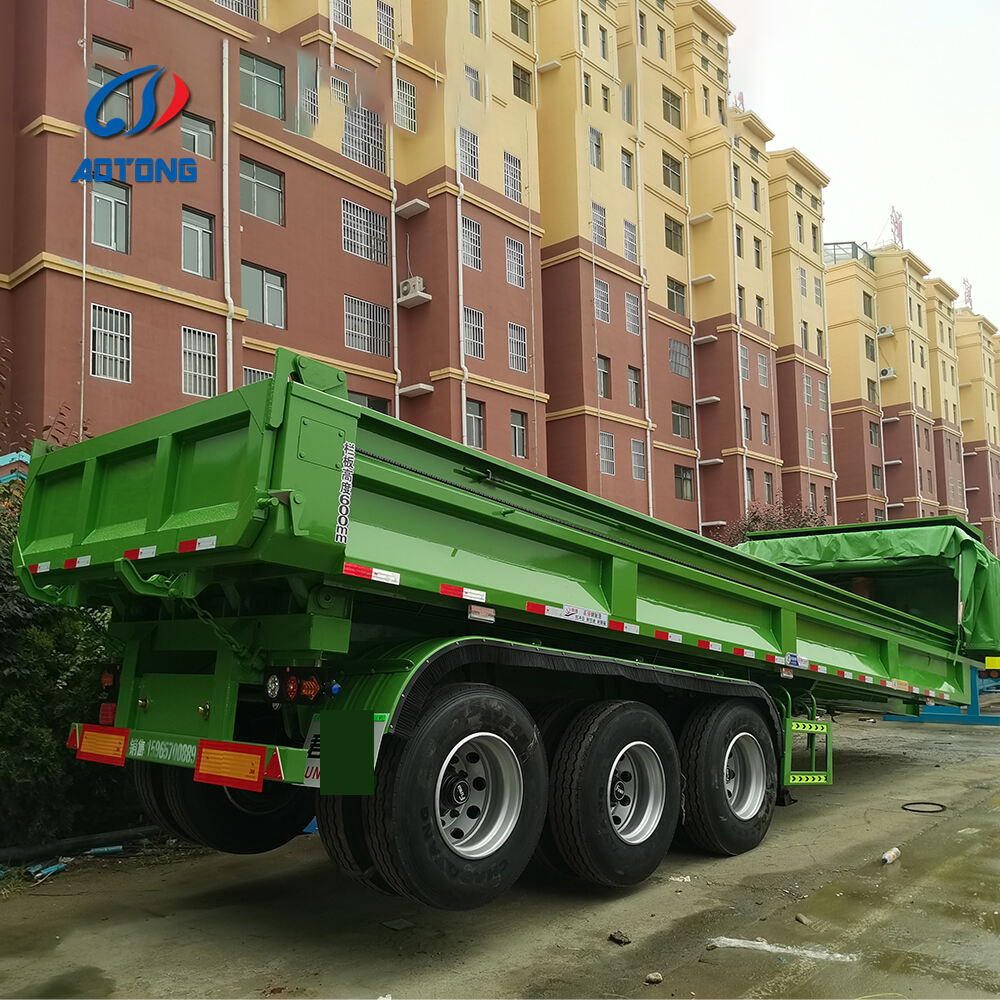
Tipping Trailer Performance on Rugged Mining Terrain
Structural Integrity Under High-Vibration Loads
Mining tipping trailers face serious vibrational stress when carrying heavy loads across rough ground. This constant shaking speeds up metal fatigue and creates real risks for frame cracks or failed joints. Smart manufacturers tackle these problems by building trailers with high tensile steel frames and extra thick cross members. They also reinforce key stress points using computer optimized gussets and install special suspension systems designed to absorb vibrations. Trailers built without these upgrades typically need around 40% more maintenance work each year according to field data. For safety reasons, most operators now rely on non destructive testing methods like ultrasonic scans to spot tiny fractures before they become major issues during dumping operations. Well engineered units have been known to last well beyond 15,000 working hours even on those brutal quarry roads where vibrations are relentless.
Axle Load Distribution and Ground Clearance Adaptations for Uneven Surfaces
On uneven mining terrain, effective load distribution and ground clearance are essential to maintain stability and prevent undercarriage damage. Multi-axle configurations (6x4 or 8x4) reduce ground pressure by 30% to 50% compared to standard setups, improving traction and minimizing soil compaction. Key design adaptations include:
| Feature | Purpose | Impact |
|---|---|---|
| Adjustable air suspension | Automatically levels trailer on slopes | Prevents axle overload |
| Increased ground clearance (500mm+) | Clears rock protrusions | Reduces undercarriage damage |
| Portal axles | Maintains height while lowering center of gravity | Enhances tip stability |
These features are especially critical in variable terrain. Elevated chassis designs with 45-degree approach angles allow safe navigation across broken rock, reducing material spillage and enabling efficient dumping on unlevel surfaces.
Stability and Safety of Tipping Trailers on Steep or Unstable Ground
Center-of-Gravity Dynamics During Tipping on Unlevel Terrain
Keeping stable when things start to tip really comes down to where the center of gravity is located, especially when working on sloped ground. When going up hills steeper than about 10 degrees, the whole system's balance point tends to move diagonally towards the lower side of the slope, which makes rollovers much more likely to happen. That's why newer trailers come equipped with special axles that can pivot and distribute power across all four wheels, helping maintain proper tire contact even on inclines as steep as 15 degrees. There are also onboard stability systems now that constantly watch for changes in weight distribution and make adjustments automatically. These systems have been shown to cut down tip-over accidents by around two thirds on tricky surfaces such as gravel roads or muddy terrain, based on recent industry reports from OSHA in 2023. Still, drivers need to remember to set up their equipment with a lower center of gravity whenever possible and steer clear of abrupt maneuvers if they want to stay safe out there.
Rollover Risk Mitigation: Lessons from Australian Open-Pit Operations (2020–2023)
In Australian open pit mines from 2020 through 2023, the implementation of triple redundant stability systems cut down rollover incidents by almost half compared to regular trailers. The main tech behind this includes automatic load sensing limiters that stop tipping when going up slopes steeper than 8 degrees, plus radar systems that map out terrain and adjust hydraulic pressure as needed. Looking at accident reports, we find that wrong load distribution caused nearly seven out of ten rollovers. Today's top mining operations have made pre tip stability checks mandatory with onboard sensors monitoring everything before lifting, while also requiring proper counterweights to be deployed. Strong chassis design and good anti roll bars make all the difference too, especially when dealing with strong winds or uneven ground during dumping operations where stability is absolutely critical.
Comparing Tipping Trailer Configurations for Site-Specific Terrain Constraints
Rear-Tipper, End-Dump, and Side-Tipper: Maneuverability and Dumping Efficiency by Landscape Type
Rear tippers work great for quick unloading at flat sites like quarries since those big hydraulic rams let material drop right out fast. The downside? Those long rear sections make them tough to handle when space gets tight around equipment or buildings. End dump trailers spread weight evenly across the ground which is good for muddy or soft surfaces, though operators need to find flat spots first or risk tipping over while dumping. Side tippers beat these options hands down on hills or narrow areas. They stay stable even on slopes around 15 degrees because they tip sideways instead of back, so there's less stress on one side of the truck. According to some field tests done in quarries last year, side tippers completed cycles about 22 percent quicker than rear tippers on angled ground simply because drivers didn't have to move position so much between loads.
Side-Tipper Advantages in Confined or Sloped Environments: Evidence from Norwegian Hydro Projects
The Norwegian mountains have become a proving ground for side-tippers, showing just how well they handle tough terrain. When working those tight mountain passes where the road angles between 10 and 20 degrees, these trucks don't need to be moved around while dumping rock material. That alone cuts down on rollover accidents by about 40 percent compared to regular dump trucks. The real magic happens with their small turning circle, something that makes all the difference when going through those hairpin bends where there's barely eight meters of space. Take the recent expansion at Lysebotn in 2021 as proof. Side-tippers kept running almost non-stop at 98% uptime, while traditional rear-tippers struggled badly on loose gravel slopes, managing only 76% uptime. No wonder construction companies keep coming back to side-tippers whenever they face difficult mountain conditions.
FAQ
What are the main challenges for tipping trailers in mining terrains?
Tipping trailers face challenges such as vibrational stress, load distribution, and maintaining stability on uneven surfaces, which can lead to metal fatigue and potential rollovers.
How do manufacturers enhance trailer durability?
Manufacturers enhance trailer durability by using high tensile steel frames, reinforcing stress points, and installing special suspension systems to absorb vibrations and reduce maintenance needs.
How do different trailer configurations suit various types of terrain?
Rear tippers are ideal for flat surfaces, side tippers perform well in confined or sloped environments, and end dump trailers are useful for spreading weight evenly on soft ground.
What technologies help in preventing rollovers in trailers?
Technologies such as triple redundant stability systems, automatic load sensing limiters, and radar systems help prevent rollovers by maintaining stability and adjusting for terrain changes.