 EN
EN

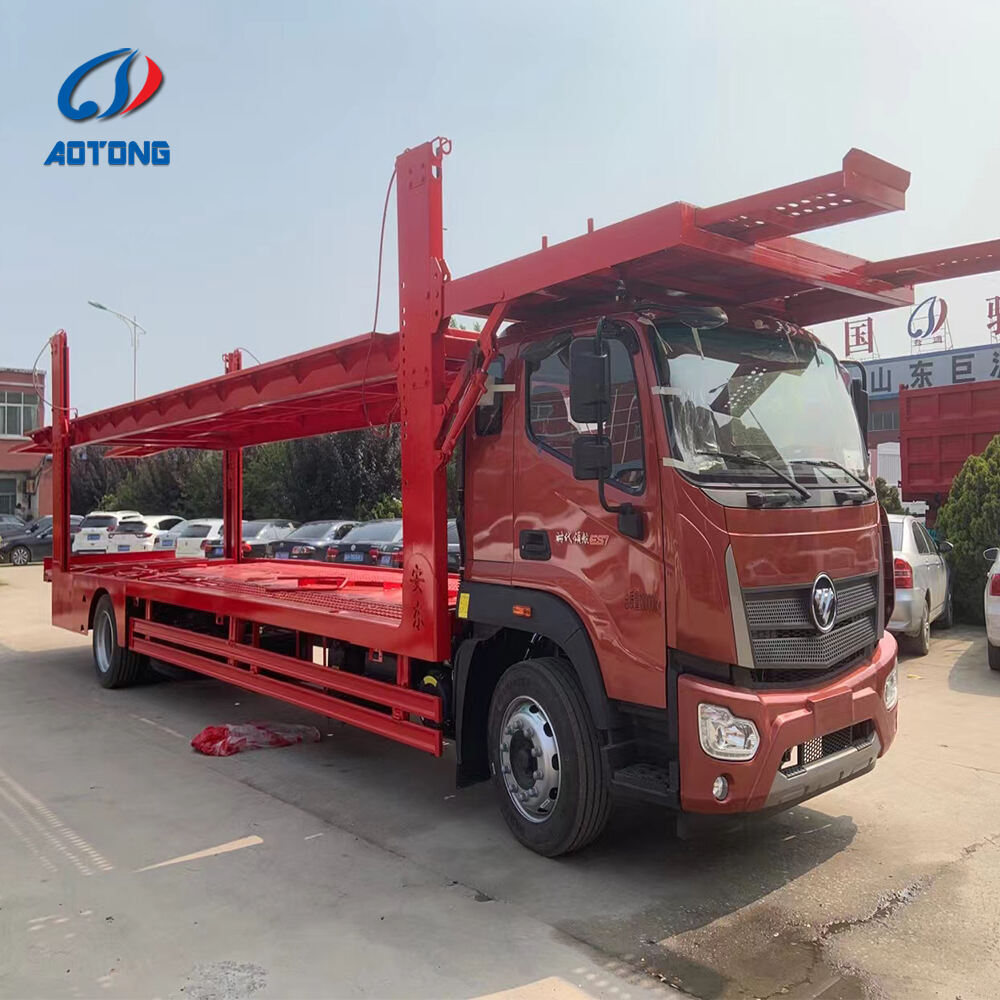
Matching Your Tow Vehicle to Car Trailer Weight Capacity
Decoding GVWR, Payload, and Tongue Weight for Safe Car Trailer Operation
The towing capacity of whatever vehicle is pulling needs to be higher than what's actually on the trailer, including whatever car or truck happens to be inside it for safety reasons. Start by checking out the owner's manual for the tow vehicle first thing. Look for something called GCWR, which stands for Gross Combined Weight Rating. This number tells how much everything can weigh together when fully loaded. Once that's found, figure out what remains after subtracting both the curb weight of the towing vehicle itself plus whatever extra stuff it already carries normally. What's left over from those calculations gives an idea of what can safely go onto the trailer without risking problems down the road.
For the trailer itself, three metrics are non-negotiable:
- GVWR (Gross Vehicle Weight Rating): The maximum allowable weight of the trailer plus all cargo—never to be exceeded.
- Payload Capacity: GVWR minus the trailer’s empty (dry) weight—the true weight allowance for your vehicle and accessories.
- Tongue Weight: The downward force exerted on the hitch, ideally 10–15% of the trailer’s total loaded weight.
Exceeding any of these limits strains drivetrain components, degrades braking performance, and significantly increases the risk of trailer sway. Always maintain at least a 20% safety margin below published capacities—loads shift in transit, and real-world conditions (e.g., wind gusts, uneven pavement) reduce effective margins.
Why 10% Tongue Weight Is a Guideline—Not a Rule—for Car Trailers
While 10% is widely cited as ideal tongue weight, optimal values depend on trailer design and operating conditions—not universal formulas. Tandem-axle trailers often achieve stability with 7–8% due to improved weight distribution across axles; single-axle units typically require 12–15% to prevent lift and sway. Environmental factors further refine this baseline:
| Condition | Recommended Tongue Weight Adjustment |
|---|---|
| Mountain terrain | Increase by 2–3% |
| High winds | Increase by 1–2% |
| Wet or icy roads | Maintain 10–12% |
When there's too much weight pressing down on the hitch, it puts extra strain on the rear suspension of the towing vehicle while also cutting down on front wheel grip. On the flip side, not enough weight can lead to wobbles down the road and makes steering less responsive. Before heading out for any serious distance, grab those portable hitch scales and check things out on flat pavement. Keep moving stuff around in the trailer until the steering starts feeling right again, solid and dependable. And remember this important point nobody wants to forget: stick with what the makers of both the car and trailer recommend instead of going by general rules. Those spec sheets contain real test data from engineers who know their stuff.
Selecting the Right Car Trailer Type and Size
Open vs. Enclosed vs. Tilt-Bed: Performance, Protection, and Cost Tradeoffs for Car Transport
Trailer type dictates protection, handling, cost, and operational flexibility—choose deliberately based on your vehicle’s value, transport environment, and usage pattern:
- Open trailers cost roughly 40% less than enclosed models and simplify maintenance, but offer no weather shielding or theft deterrence—ideal for short-haul utility transport or vehicles already exposed to road conditions.
- Enclosed trailers deliver full climate and security protection, critical for high-value, collector, or restored vehicles—but increase aerodynamic drag, raising fuel consumption by 15–20%.
- Tilt-bed trailers, while eliminating ramp dependency and easing low-clearance loading, sacrifice some dynamic stability on rough or sloped terrain unless properly equipped with stabilizing jacks and reinforced frames.
Prioritize enclosed trailers for irreplaceable or high-appreciation assets; open or tilt-bed configurations suit functional, frequent-use scenarios where speed and affordability outweigh premium protection.
Sizing Your Car Trailer by Vehicle Dimensions, Clearance, and Frequency of Use
Accurate sizing prevents mechanical stress, regulatory violations, and unsafe load dynamics:
- Measure your vehicle’s length, width, and wheelbase, then add 12–18 inches of clearance—especially forward of the axle and above the roofline—to accommodate suspension travel and secure tie-down angles.
- Confirm ground clearance compatibility: Vehicles with ¢5 inches of clearance require tilt-bed or low-angle ramp designs to avoid scraping during loading.
- Factor in usage frequency and duty cycle: Occasional use favors lightweight aluminum or budget steel builds; weekly or commercial hauling demands heavy-duty frames, corrosion-resistant coatings, and reinforced floor structures.
For oversized vehicles—such as full-size trucks or SUVs exceeding 22 feet—gooseneck trailers provide superior weight distribution and yaw resistance. Always verify that your selected trailer’s GVWR and tongue weight range align with your tow vehicle’s receiver class and payload rating.
Ensuring Car Trailer Safety: Hitch Class, Braking, and Load Stability
Hitch Compatibility (Class III–V) and Brake System Selection for Reliable Car Trailer Control
The hitch class needs to align with both the trailer's GVWR and the receiver rating of the tow vehicle - there really isn't any room for compromise here. For most midsize SUV owners and those driving half-ton trucks that pull single trailers, Class III hitches work well since they handle up to 8,000 pounds GCWR. When dealing with heavier loads though, things get serious fast. Class IV options cover weights from 10,000 to 14,000 pounds while Class V handles everything above that mark right up past 18,000 pounds. These higher capacity hitches become absolutely necessary when working with tandem axle trailers or gooseneck configurations that carry multiple units or exceptionally heavy cargo. Going with something too small can lead to disastrous outcomes including complete detachment during travel, structural damage to the vehicle frame, or even dangerous changes in how the wheels respond to steering inputs. Safety first always applies when selecting towing equipment.
Trailers over 3,000 pounds when loaded need brakes according to regulations, though many experts recommend them even for lighter loads where safety matters most. Electric braking systems connected through a proportional controller inside the cab offer better control since they respond smoothly as the driver presses the main brake pedal. The hydraulic surge type works automatically when slowing down but doesn't give much control over how hard it stops, sometimes causing problems going downhill at steep angles. Forgetting about proper brake setup really makes a difference in emergencies. Studies from NHTSA show stopping distances can get up to 40% longer without good brake integration, which means potential danger situations become even riskier.
Engineering Load Distribution to Prevent Sway—Lessons from Real-World Car Trailer Dynamics
Improper weight distribution accounts for approximately 60% of trailer sway incidents—many escalating into jackknifing or rollover. Prevention hinges on physics-based positioning:
- Place 60% of total cargo weight forward of the trailer’s axle centerline, anchoring mass near the pivot point to resist lateral torque.
- Maintain 10–15% tongue weight, verified with scales—not estimated—to ensure consistent downward force and hitch articulation control.
- Use weight-distribution hitches (WDH) with spring bars for trailers over 5,000 lbs GVWR; they transfer load more evenly across all axles, restoring front-axle grip and reducing sway amplification.
Real-world testing confirms trailers operating below 5% tongue weight exhibit triple the sway incidence versus those within spec. Secure all cargo with ratchet straps rated for at least double the load’s weight—never rely on friction alone. Straps must attach to structural anchor points, not body panels or trim.
Legal and Insurance Requirements for Car Trailer Ownership
Following regulations is not something to skip over if someone wants to stay out of legal trouble and keep operations running properly. Nearly every state in America needs trailers weighing between 1500 to 3000 pounds gross vehicle weight rating (GVWR) to be titled and registered. These requirements can differ quite a bit from one location to another, which means checking with the local Department of Motor Vehicles makes sense before ever hitting the road with such equipment. When registering these trailers, having proof of ownership becomes essential. This documentation typically comes in three forms: a Manufacturer's Certificate of Origin, a simple bill of sale showing purchase details, or sometimes even an existing title from previous owners.
Getting proper insurance for your trailer matters just as much as covering your car itself. Most regular auto insurance plans don't touch trailers or what's inside them when something goes wrong. What most people end up needing is either a separate trailer insurance policy or adding an endorsement to existing coverage that specifically includes things like liability risks, actual damage to the trailer body, and protection for whatever goods might be loaded onboard. Trailers that aren't properly insured can put owners on the hook financially if someone gets hurt or property gets damaged during transport. And there's another catch worth mentioning here about gross vehicle weight rating (GVWR). If the trailer exceeds its GVWR at the moment of an accident, insurance companies often refuse to pay out any claims related to that incident.
The federal government sets some basic rules for lighting and safety equipment on trailers. Every trailer needs functioning brake lights, working turn signals, proper reflectors, and those safety chains should cross under the tongue of the trailer. Then there are the state regulations that pile on top of these basics. Things get complicated when dealing with commercial operations, moving across state lines, or hauling anything heavier than 10,000 pounds gross vehicle weight rating. Trailers in this weight class might need USDOT registration plus yearly inspections. Don't take chances with old information from random websites or forums. Check directly with your local DMV for what's actually required right now in your area.
FAQ
1. What are the key metrics to consider when matching a tow vehicle and trailer?
The key metrics include Gross Combined Weight Rating (GCWR), Gross Vehicle Weight Rating (GVWR), Payload Capacity, and Tongue Weight. Ensure the towing capacity of the tow vehicle is higher than the load on the trailer.
2. How does tongue weight impact trailer stability?
Proper tongue weight maintains balance and control while towing. It should generally be 10-15% of the trailer's loaded weight to ensure safe handling and prevent sway.
3. What are the different types of car trailers and their benefits?
Car trailers come in open, enclosed, and tilt-bed types. Open trailers are cost-effective but offer minimal protection; enclosed trailers provide security against weather and theft; tilt-bed trailers ease the loading process but may lack stability on rough terrain.
4. Why is trailer brake integration important?
Trailer brakes enhance control, especially on trailers over 3,000 pounds. Electric braking systems offer better responsiveness aligned with the vehicle's braking system, reducing stopping distances and improving safety.
5. What legal and insurance requirements should be considered for towing a trailer?
Trailers often need registration, titling, and appropriate insurance coverage. Adhering to weight ratings and local DMV regulations is crucial to avoid legal and financial repercussions.
Table of Contents
- Matching Your Tow Vehicle to Car Trailer Weight Capacity
- Selecting the Right Car Trailer Type and Size
- Ensuring Car Trailer Safety: Hitch Class, Braking, and Load Stability
- Legal and Insurance Requirements for Car Trailer Ownership
-
FAQ
- 1. What are the key metrics to consider when matching a tow vehicle and trailer?
- 2. How does tongue weight impact trailer stability?
- 3. What are the different types of car trailers and their benefits?
- 4. Why is trailer brake integration important?
- 5. What legal and insurance requirements should be considered for towing a trailer?