 EN
EN
What Is a Lowboy Trailer? Core Design and Key Structural Features
Defining the Lowboy: Height, Deck Configuration, and Axle Layout
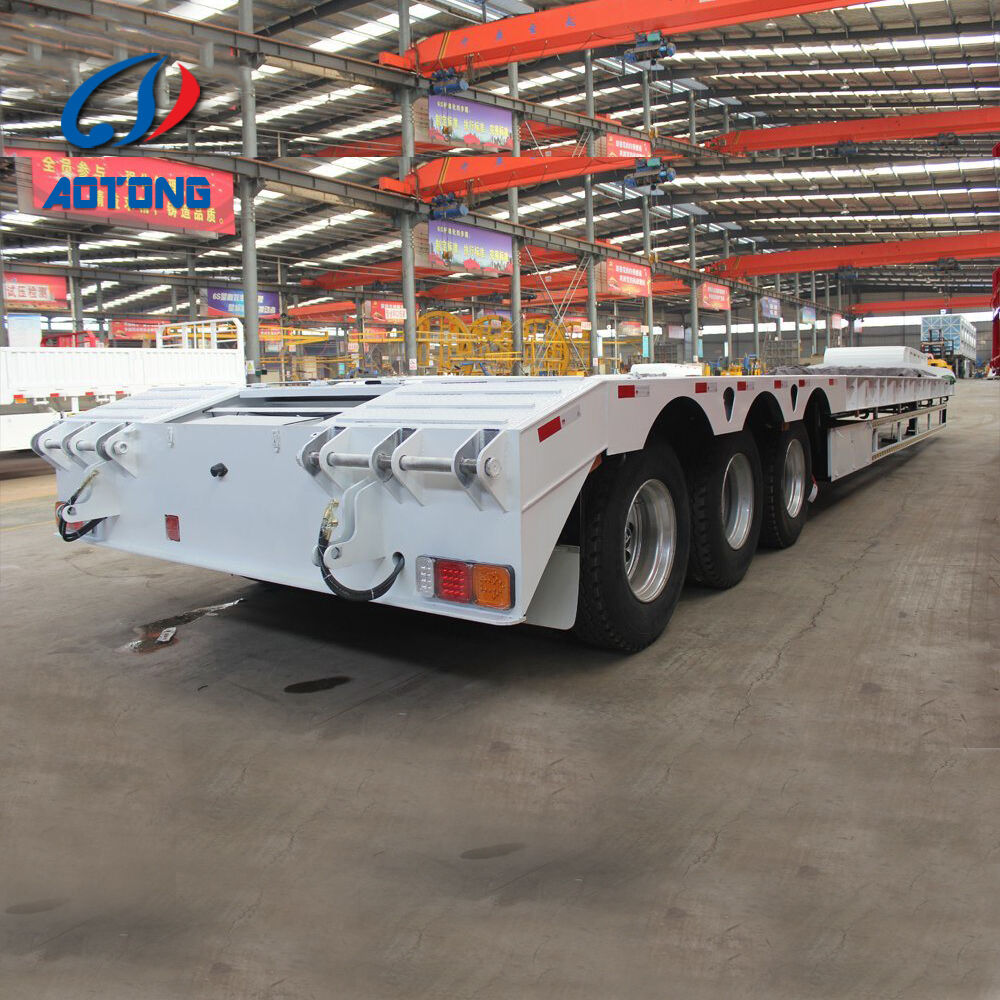
Lowboy trailers have this special double drop setup where the main deck sits around 18 to 24 inches off the ground, which is actually below the axle level. This helps keep everything super stable by lowering the center of gravity. There are basically two separate drops in these designs. One happens right at the gooseneck area, while the second occurs when the deck slopes down past the axles themselves. Most manufacturers equip their models with either two or four axles so they can spread out those heavy loads properly across the road surface. These trailers frequently come with hydraulic suspension systems too, which makes them much better at absorbing shocks during transportation. What all this means is that construction companies can legally move really tall machinery such as big excavators and mobile cranes without running afoul of bridge height restrictions set by states or violating federal clearance standards along the way.
Standard vs. Extendable and Removable Gooseneck Variants
Regular fixed-gooseneck lowboys work fine for those standard runs where everything goes according to plan, but when things get unpredictable, the removable gooseneck (RGN) versions become real game changers. The whole neck part comes off so operators can load heavy machinery right from the front end without needing ramps or extra gear hanging around. Some models even have extendable frames that stretch out the deck area by roughly 10 to maybe 15 feet, which makes all sorts of awkward cargo fit better. Trucking companies report saving about 40% on loading times with these setups versus regular trailers, so they tend to favor them whenever schedules are tight or what needs transporting changes day to day.
Top Applications of Lowboy Trailers Across Industries
Heavy Equipment Transport (Excavators, Bulldozers, Cranes)
Lowboy trailers have become pretty much standard across industries when it comes to transporting expensive, heavy machinery like excavators, bulldozers, and those big lattice boom cranes used in construction, mining, and farming operations. The main advantage? Their super low deck design solves those pesky overhead clearance problems when driving through city streets or underneath bridges. Plus, with multiple axles distributing weight evenly, these trailers can handle loads well over 80,000 pounds without breaking a sweat. Mining companies depend on lowboys to move their massive drilling rigs from one site to another. Farmers need them every season when swapping out equipment. Contractors love them for shifting tower cranes between different job locations, which keeps projects running smoothly without downtime caused by equipment shortages.
Construction, Energy, and Infrastructure Project Support
For big construction jobs, these specialized trailers are basically essential equipment. When working on energy projects, crews use them to move massive wind turbine parts like blades and nacelles, plus transformers, over rough, unpaved roads where regular trucks would struggle. Construction companies rely on these rigs to haul bridge sections, ready-made concrete pieces, and long pipeline segments too. What makes them stand out is their compliance with federal weight regulations without needing extra paperwork. This means they can carry loads well over 80,000 pounds legally, which speeds up deliveries and cuts down on delays at construction sites for things like roadwork and solar farms.
Critical Selection Criteria for Buying or Renting Lowboy Trailers
Payload Capacity, Gross Vehicle Weight Rating (GVWR), and Legal Compliance
Getting the numbers right on how much weight a trailer can carry matters a lot for staying within safety and legal boundaries. When folks go beyond what the manufacturer says is okay, they're playing with fire really. The stats back this up too - around 37% more accidents happen when weight limits get ignored according to recent Department of Transportation findings from last year. On most interstates across the country, there's that hard cap at 80 thousand pounds total for vehicles, but states have their own specific rules about how weight should be spread out between axles. Before loading anything heavy onto a trailer, take time to check against the actual GVWR rating stamped somewhere on the unit itself. Don't forget those extra bits like winches or tie downs either since these count toward overall weight. And absolutely double check local regulations wherever heading because some places require special permits for big loads. Skip this step and expect trouble down the road both literally and figuratively speaking. Fines can run well over fifteen grand not to mention all sorts of headaches if projects get delayed because of violations.
Hydraulic vs. Mechanical Suspension and Tire Configuration Considerations
The kind of suspension used makes all the difference when it comes to how long equipment lasts, what the ride feels like, and whether cargo stays protected during transport. Hydraulic suspensions are great at absorbing shocks which is why they're so popular for transporting delicate or expensive machinery across bumpy terrain. But these systems need regular maintenance checks that can get costly over time compared to their mechanical counterparts. Mechanical suspensions tend to be cheaper in the long run if the roads are kept in decent condition, though they do pass along more road vibrations to whatever's being carried. When choosing between different suspension types, don't forget about matching them with the right tires either. For big excavators weighing over 60k lbs, radial tires work best on multi-axle configurations because they spread out the weight better. And remember those wide base tires? They really help stabilize machines working on muddy or rocky construction sites. No matter what setup you go with, double check that the tire load rating matches exactly what the trailer's GVWR specifies. Getting this wrong could lead to blown tires and plenty of headaches dealing with inspection failures down the line.
Operational Benefits and Safety Advantages of Lowboy Trailers
Lower Center of Gravity and Enhanced Load Stability
With its low deck design, cargo sits much closer to the ground which brings down the center of gravity quite a bit. This makes a real difference in safety numbers too – studies show around 40% less chance of rolling over compared to regular flatbed trucks when moving heavy stuff like cranes or those big articulated loaders. Especially important during tight corners or when roads aren't perfectly flat. Better weight spread across the truck cuts down on side-to-side movement and makes brakes work faster, so everything moves along safely even when conditions get tricky on the road.
Improved Maneuverability and Reduced Bridge Formula Restrictions
The way lowboy trailers are designed with proper axle spacing and weight distribution makes them much easier to maneuver in tight spots like construction sites or factory grounds. These trucks typically have multiple axles that spread out the load better, which helps drivers avoid running afoul of those complicated federal bridge formulas everyone hates dealing with. Because of this setup, companies can haul really heavy stuff legally without needing those extra permits for oversized loads. Most of the time we're talking about cargo weights well above 80k pounds here. For contractors working on time-sensitive projects in fields like road building or oil and gas development, getting equipment to job sites faster means everything when deadlines are literally written into contracts.
Maintenance Essentials and Long-Term Cost Efficiency of Lowboy Trailers
Regular maintenance schedules really make all the difference when it comes to how long equipment lasts and what it ultimately costs to own. Every day, operators need to check things like tire pressure, how much tread remains on tires, whether brakes respond properly, and if couplings stay intact. These simple daily checks matter a lot because breakdowns on the road can set companies back around $740k each time according to research from the Ponemon Institute last year. For monthly work, look at wear on suspension parts, make sure frames are aligned correctly, and keep an eye on hydraulic fluids. Annual deep dives into the machinery involve checking axle bearings, brake systems, and ensuring the whole hydraulic setup works as intended. Companies that stick to these routine checks tend to get their machines running for 7 to 10 extra years compared to those who wait until something breaks down. What's more, keeping detailed records digitally helps predict problems before they happen, which means fewer surprises and keeps deliveries on track for important projects with success rates staying above 94% most of the time.
FAQ Section
What is a lowboy trailer used for? Lowboy trailers are primarily used for transporting heavy machinery such as excavators, bulldozers, and cranes. They are designed to solve overhead clearance problems and distribute weight evenly.
How does a lowboy trailer improve safety? The low deck design lowers the center of gravity, reducing the risk of rollovers by about 40% compared to regular flatbed trucks.
What are the benefits of a removable gooseneck lowboy trailer? Removable gooseneck lowboy trailers allow the neck part to be removed for front-end loading, saving about 40% on loading times compared to regular trailers.
Why is regular maintenance important for lowboy trailers? Regular maintenance extends the lifespan of the trailer and reduces the cost of ownership by preventing breakdowns that can be costly.
Table of Contents
- What Is a Lowboy Trailer? Core Design and Key Structural Features
- Top Applications of Lowboy Trailers Across Industries
- Critical Selection Criteria for Buying or Renting Lowboy Trailers
- Operational Benefits and Safety Advantages of Lowboy Trailers
- Maintenance Essentials and Long-Term Cost Efficiency of Lowboy Trailers
- FAQ Section