 EN
EN

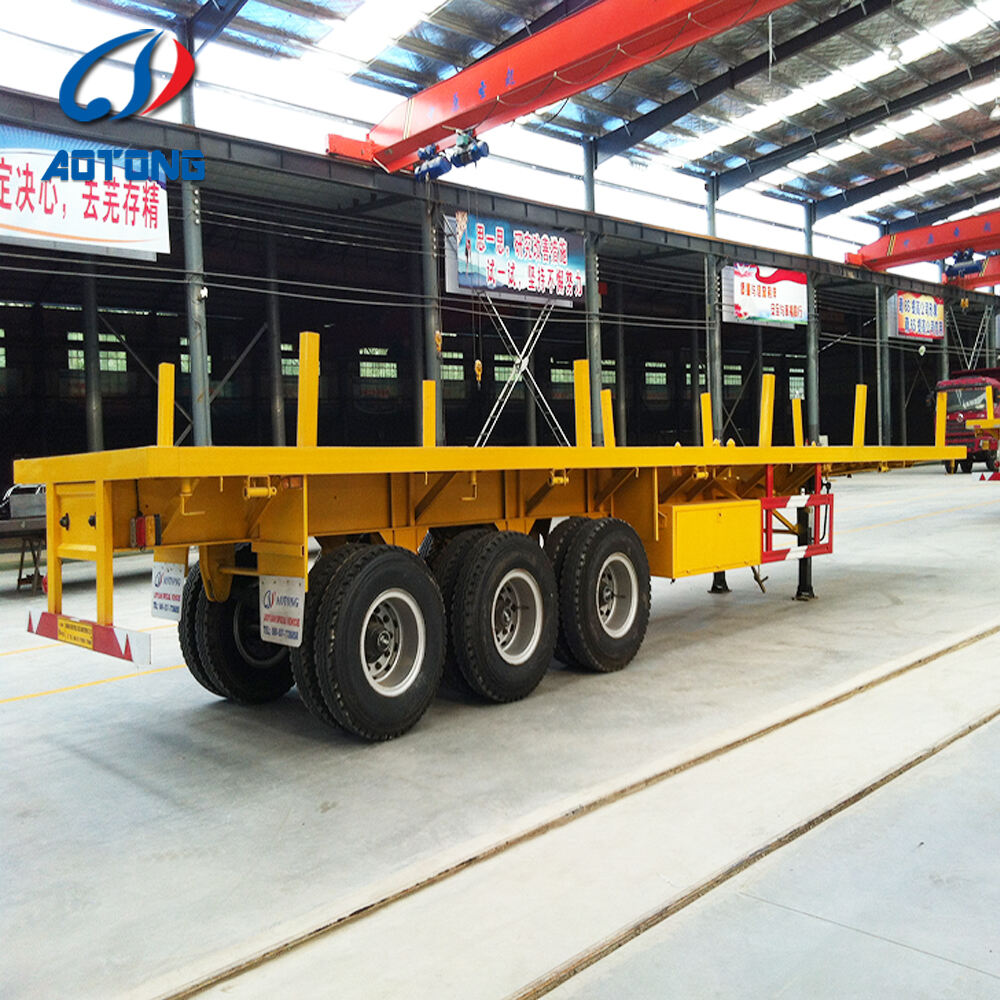
Unmatched Flexibility for Oversized and Irregular Loads
Why flatbed trailers are the go-to solution for non-standard freight — from steel beams to prefabricated structures
Flatbed trailers have become pretty much the go-to solution for moving oversized or oddly shaped cargo that just won't fit inside those regular enclosed trailers. The whole point of their open deck design is to handle all sorts of weird stuff - think 53 foot steel beams standing upright or even entire sections of buildings stacked several stories high. No worries about height limitations here. Most folks load these things from the top using cranes or sideload them right onto the trailer bed with forklifts and other heavy machinery. There's really no need to take apart or move around what's being transported. Since there aren't any sides on these trailers, most regulations allow loads to stick out as much as 8 feet 6 inches across if local rules permit. And those reinforced stake pockets? They're basically everywhere around the perimeter, giving haulers plenty of spots to attach chains, binders, and whatever else keeps the cargo secure during transport. Industry folks talk about how this flexibility cuts down on planning headaches somewhere around 40% give or take, which explains why flatbeds remain so important for anyone dealing with specialty freight that doesn't fit into normal shipping containers.
Real-world case: Transporting wind turbine blades across the Midwest with regulatory compliance and load security
Moving those massive 260 foot wind turbine blades through the Midwest is no small feat. It takes careful planning to get everything right from the trailer setup to knowing which states have what rules about transporting oversized loads. Most operators rely on extendable flatbed trucks equipped with hydraulic dollies these days. These special setups help them make those tricky turns around bridges and under power lines that are just barely tall enough. The drivers follow specific routes approved by state departments of transportation, sometimes having to detour hundreds of miles out of their way. To keep the blades secure during transit, composite straps apply about 12,000 pounds of force at the base of each blade. And there's always someone riding along in a pilot vehicle ahead of time to check road conditions and warn other traffic well before the big load arrives. Despite all sorts of weather challenges from snowstorms to sudden thunderstorms, companies managing these transports report keeping losses down to less than half a percent. That speaks volumes about how flatbed operators manage to juggle government regulations, protect expensive equipment, and still get those vital renewable energy components where they need to go.
Faster, More Efficient Loading and Unloading
40% faster turnaround vs. enclosed trailers: How open-deck access reduces dock time and labor costs
Flatbed trailers can reduce loading and unloading times by around 40% when compared to their enclosed counterparts. The main reason? Open decks give full access without those pesky swing doors, ceiling restrictions, or anything blocking the way inside. Workers get to handle cargo from multiple angles at once instead of fighting through limited space. This kind of accessibility really cuts down on how long trucks need to stay at docks, which means each trailer can make more runs throughout the day and keeps the whole fleet running smoother. Time is money after all. For every hour saved while loading or unloading, companies save about $120 in labor expenses alone. These savings add up fast during busy shipping periods when every minute counts.
Multi-directional loading: Seamless integration with cranes, forklifts, and side-loaders on job sites
Without those fixed sides, workers get complete access all around the platform. That means cranes can hoist heavy machinery straight up onto the deck, forklifts can roll right across the whole width from the side, and side loaders can place those modular parts exactly where they need to go without having to turn them around first. This really matters on tight job sites where there just isn't room for the usual back loading stuff. When we look at actual numbers from the field, crane help alone saves about 35% of the time normally spent moving equipment into position compared to regular methods. Projects finish faster, machines sit idle less, and everyone gets things done more efficiently on site.
High-Weight Capacity and Structural Durability
Engineered for heavy-duty hauling: 48,000 lbs GVWR, reinforced steel decks, and customizable tie-down configurations
Flatbed trailers can handle serious weight and last for years on end, with some models rated to carry up to 48,000 pounds gross vehicle weight. These tough trucks are ideal for transporting heavy stuff like cast iron parts, big chunks of precast concrete, or even complete pieces of factory equipment ready to install. The deck itself is made from high tensile steel that has been tested repeatedly to make sure it won't bend or warp after driving countless miles while carrying these massive loads day after day.
Customizable tie-down systems—including adjustable anchor points, winch-ready stake pockets, and modular edge protectors—enable rapid, load-specific securement. Operators report 30% faster securement versus standard trailers, and the open layout simplifies weight distribution adjustments needed to comply with state bridge laws.
| Feature | Performance Impact |
|---|---|
| 48,000 lbs GVWR | Enables heaviest legal loads without permits |
| Reinforced steel deck | Reduces flex during transit by up to 40% |
| Modular tie-downs | Cuts cargo shift incidents by 58% (FMCSA 2023) |
This combination of rated capacity, material resilience, and adaptable securement makes flatbeds the dominant choice for heavy-haul logistics.
Industry-Specific Versatility and Risk-Mitigated Operations
Flatbed trailers are absolutely essential equipment throughout various industries including construction sites, farms, factories, and energy projects. On building sites these trailers carry heavy items like steel beams, parts for bridges, and ready-made walls. Farmers rely on them to transport big machinery such as combine harvesters and grain drying units. Manufacturing plants need them too when moving large factory equipment and components for power generators. When it comes to safety, everyone follows OSHA guidelines for securing cargo. The industry uses specially designed tie down systems that spread out the pressure so nothing shifts around during transport. This helps avoid costly damage from things bouncing around while being hauled long distances.
Balancing visibility and vulnerability: Proven strategies to mitigate weather exposure and cargo theft risks
While open decks enhance operational flexibility, they require deliberate risk mitigation. For moisture-sensitive cargo—such as drywall, insulation, or electronics—waterproof tarps with integrated tensioning systems reduce water-related claims by 92%, per 2023 freight insurance data. To deter theft:
- Geo-fenced GPS tracking triggers real-time alerts for unauthorized stops or route deviations
- Drivers are trained in FMCSA cargo security protocols, including secure parking in well-lit, high-traffic areas
- Strategic route planning avoids known high-theft corridors and minimizes off-hours layovers
| Risk Mitigation Strategy | Effectiveness | Implementation Cost |
|---|---|---|
| Reinforced Tarpaulin Systems | 89% damage reduction | $$ |
| Real-Time GPS Monitoring | 78% theft deterrence | $$ |
| Strategic Route Planning | 67% fewer high-risk zones | $ |
This dual emphasis on functional versatility and proactive risk management underscores why flatbed trailers remain indispensable in specialized, high-stakes logistics operations.
FAQ
Why are flatbed trailers preferred for transporting oversized loads?
Flatbed trailers are preferred because of their open deck design, which allows for irregular and oversized cargo to be loaded and transported without the restrictions posed by enclosed trailers.
How do flatbed trailers ensure the security of the load during transport?
Flatbed trailers utilize reinforced stake pockets for secure tie-downs, and operators often use composite straps which apply significant force to keep loads in place.
What industries heavily rely on flatbed trailers?
Industries like construction, agriculture, manufacturing, and energy sectors heavily rely on flatbed trailers for transporting large and heavy equipment.
What are some risk mitigation strategies for flatbed trailer operators?
Common strategies include using waterproof tarps for moisture-sensitive items, geo-fenced GPS tracking for security, and training drivers in FMCSA cargo security protocols.