 EN
EN

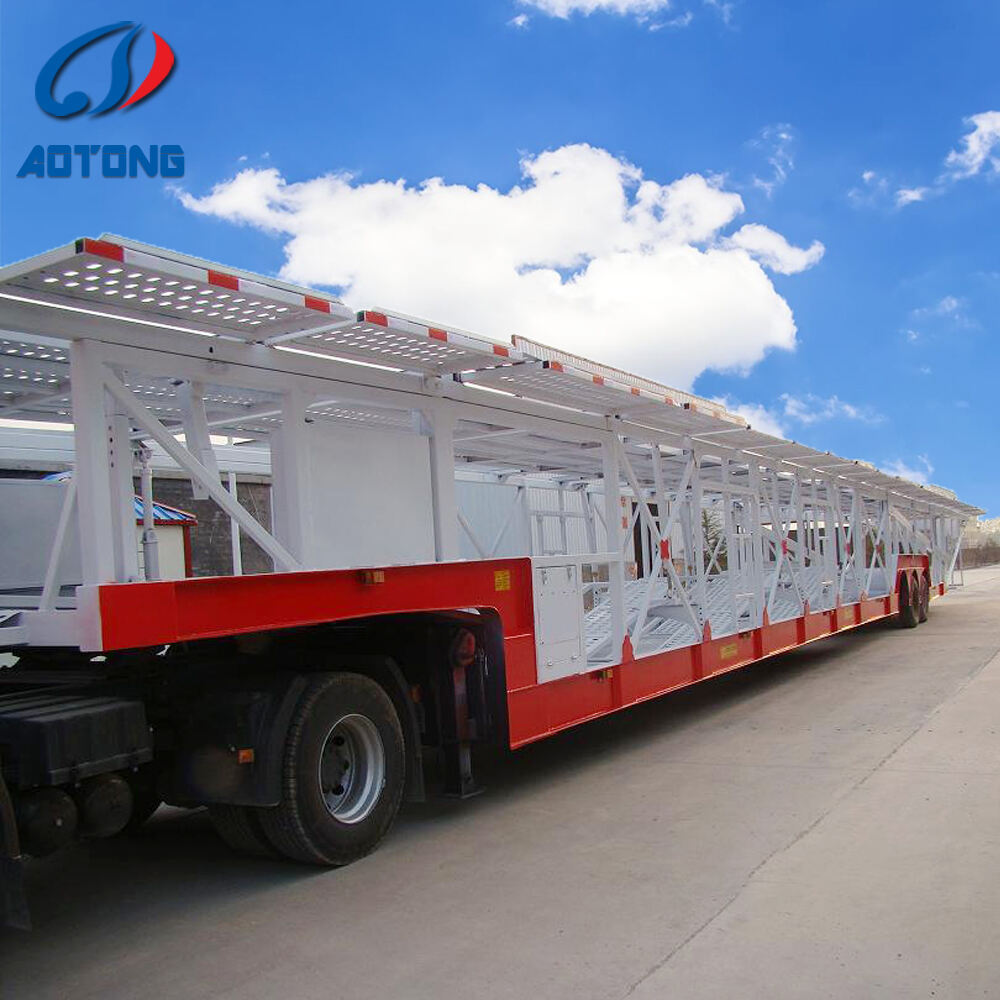
Car Trailer Weight and Load Distribution: Shifting Center of Gravity and Stability Limits
Vertical and longitudinal center-of-gravity shifts under tongue weight and cargo placement
The tongue weight actually changes where the center of gravity (CG) sits for a car trailer, both going up/down and front/back. Most folks in the business say around 10 to 15 percent of what the whole trailer weighs should be pressing down on that hitch connection point. Take a 2000 pound trailer for instance, we're talking about needing somewhere between 200 and 300 pounds pushing down there. When someone packs too much stuff at the front of the trailer, this lifts the CG higher off the ground while also moving it closer to the back of the towing vehicle. This can push an extra 30% weight onto those rear wheels. On the flip side, loading things too far back creates what's called negative tongue weight. The hitch gets lifted instead of being pulled down, which takes pressure off the drive wheels. This makes steering less responsive and increases the chances of fishtailing when speeds hit over 45 miles per hour.
Amplified roll, pitch, and yaw—how trailer dynamics exceed OEM stability thresholds
A trailer’s movement multiplies forces on the tow vehicle, pushing handling beyond factory-designed stability margins in three key ways:
- Roll dynamics intensify during turns as a high-CG trailer shifts lateral weight outward—doubling rollover likelihood versus an unladen vehicle
- Pitch oscillations worsen during braking or acceleration when cargo placement disrupts longitudinal balance, causing suspension bottom-out or nose-diving
- Yaw instability emerges as trailer sway when crosswinds or abrupt maneuvers trigger resonant motion between vehicle and trailer—overwhelming standard ESC systems
These combined effects degrade overall handling margins by 40–60% compared to solo driving, making intentional load management essential—not optional.
Car Trailer Braking Systems: Synchronization, Stopping Distance, and Rear-Axle Integrity
Surge vs. electric brakes: real-world deceleration gaps and NHTSA-validated 32% stopping distance variance
Surge brakes work by creating hydraulic pressure when the trailer actually pushes back against the towing vehicle as it slows down. With electric brakes, things happen much faster because they kick in right away when someone hits the brake pedal, and they connect directly to the car's own braking system. According to testing done by NHTSA, these electric systems can cut stopping distance by around 32 percent for trailers weighing about 3,500 pounds going at 60 miles per hour. This happens mainly because surge brakes take time to activate and lose some power through hydraulic friction. Another big advantage of electric brakes is their ability to adjust how hard they brake automatically thanks to built-in sensors. This makes them respond better whether driving fast or slow, and regardless of what kind of roads are being driven on.
Brake desynchronization risks: rear-axle lift, wheel lockup, and loss of steering control
When trailer brakes don't match properly, the whole towing setup becomes unstable. If the trailer brakes are too strong, they can actually lift up the rear axle of the tow vehicle. This reduces tire contact with the road surface by around 40 percent, which makes wheels lock up easily when roads are wet or covered in ice. On the flip side, weak brake systems create serious problems too. Trailers tend to swing out sideways, increasing the chance of jackknifing accidents. According to crash studies from SAE, drivers often lose complete control of their steering in just one or two seconds during these situations. Several factors contribute to this issue. First, if the weight distribution isn't right - especially when tongue weight exceeds about 12 percent - it puts extra strain on rear brakes. Then there's the problem of electrical connections losing power through the wiring harness. And let's not forget about gain settings that end up being too aggressive for lighter trailers. The best solution? Getting those trailer brakes to slow down at exactly the same rate as the tow vehicle. Most experienced mechanics will tell you this synchronization is absolutely essential for safe towing conditions.
Car Trailer Towing Dynamics: Acceleration Loss, Power-to-Weight Degradation, and Throttle Response
Torque demand curves for 1,500–3,000 lb car trailers and their impact on passenger vehicle drivetrain behavior
When pulling those big car trailers weighing anywhere from 1,500 to 3,000 pounds, something interesting happens to how power gets delivered through the vehicle. As weight increases, the engine needs way more torque just to keep moving forward, which pushes it beyond where it works best. Take a mid size SUV for example - hooking up a 3,000 pound trailer usually slows down acceleration from 0 to 60 mph somewhere around 35 to 50 percent slower than normal. The whole power to weight balance gets thrown off too, so transmissions tend to downshift often and stay engaged longer in gears than usual. Drivers will notice the throttle feels laggy because the computer inside the car is actually protecting the drivetrain components rather than giving full acceleration power right away, particularly when trying to climb hills or merge onto highways. All this extra strain takes a toll on parts like clutches, differential systems, and various transmission components over time.
Car Trailer Safety Risks: Sway, Disconnection, and Control Loss from Improper Setup
Sway Onset Velocity by Trailer Length, Height, and Load CG—Validated Against SAE J2807
The speed at which trailers start swaying around is actually pretty predictable based on their shape and how stuff is loaded inside. Longer trailers (anything over 16 feet) tend to become unstable at much slower speeds compared to smaller ones because they have more leverage when turning corners. For every extra six inches the center of gravity gets higher in the load, stability drops off quite a bit too - somewhere between 8 to 10 miles per hour according to those industry tests everyone references. When people stack things like all terrain vehicles on top of each other or mount heavy equipment on roofs, this creates these swinging motions that regular stabilizers just can't handle once vehicles hit normal highway speeds. According to those same standardized tests from SAE, putting about two thirds of the total weight ahead of where the wheels are located actually makes the trailer stay straighter for longer periods. This simple adjustment helps prevent that annoying side-to-side motion we all dread during road trips.
FAQ
-
What is the recommended tongue weight percentage for a car trailer?
Generally, it is recommended that 10 to 15 percent of the total trailer weight should apply pressure on the hitch connection point to maintain stability.
-
How much can trailer dynamics affect a towing vehicle's handling?
The combined effects of roll, pitch, and yaw movements can degrade overall handling margins by 40–60% compared to driving without a trailer.
-
Why are electric brakes more effective than surge brakes for trailers?
Electric brakes engage more swiftly and can adjust braking power due to built-in sensors, reducing stopping distances by around 32% compared to surge brakes.
-
What are the risks of brake desynchronization?
Brake desynchronization can lead to rear-axle lift, wheel lockup, loss of steering control, and increase the chance of jackknifing accidents.
-
How does towing heavy trailers impact engine and drivetrain performance?
Towing heavy trailers increases torque demand, slowing acceleration and causing transmissions to downshift more frequently, affecting drivetrain components over time.
-
How does trailer sway develop?
Trailer sway can occur due to improper load distribution, excessive trailer length, or elevated center of gravity, impacting stability at high speeds.
Table of Contents
- Car Trailer Weight and Load Distribution: Shifting Center of Gravity and Stability Limits
- Car Trailer Braking Systems: Synchronization, Stopping Distance, and Rear-Axle Integrity
- Car Trailer Towing Dynamics: Acceleration Loss, Power-to-Weight Degradation, and Throttle Response
- Car Trailer Safety Risks: Sway, Disconnection, and Control Loss from Improper Setup
- FAQ