 EN
EN

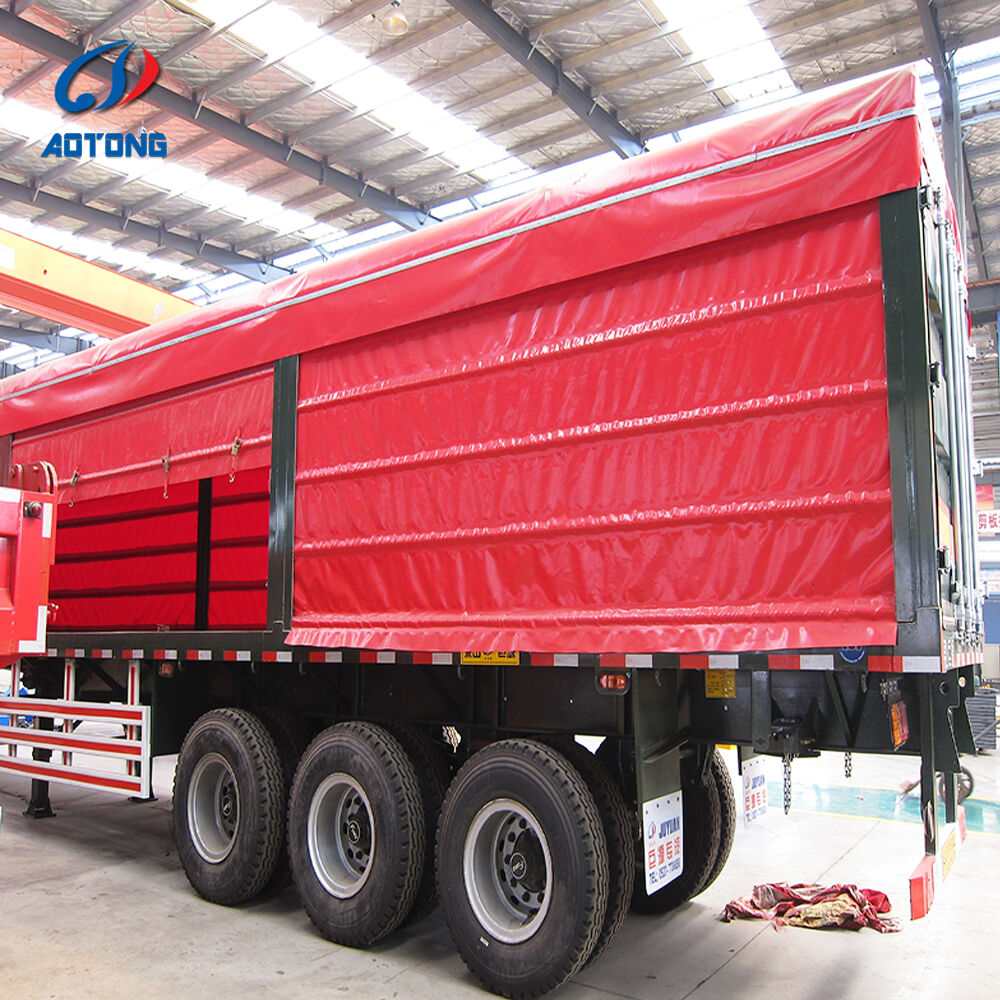
Core Load Restraint Principles for Curtain Side Trailers
Why Load Shift Is the Leading Cause of Curtain Side Trailer Incidents
According to the National Transport Safety Board's latest figures from 2023, around 70% of problems with curtain side trailers actually come down to load shifting issues. Curtain sides just don't offer much lateral support compared to those solid wall trailers, which leaves everything inside pretty exposed to moving around while on the road. Think about all those sudden stops, tight corners, and bumpy stretches we hit daily driving these trucks - they send shockwaves through any cargo that isn't properly secured. The same fabric that makes loading so convenient becomes a headache when the tension isn't right or those old tie downs start failing after years of use. Every time something shifts without restraint, it creates bigger stability issues down the line. That's why experienced drivers know good placement matters and often add extra friction points wherever possible.
How Dynamic Forces (Acceleration, Braking, Cornering) Dictate Restraint Strategy
Acceleration, braking, and cornering generate dynamic forces up to 0.8g during deceleration and 0.5g laterally, as defined in ISO 27956:2021. Effective restraint strategies must counteract these forces through three interdependent elements:
- Friction coefficients, calculated between cargo base and trailer floor to prevent sliding;
- Restraint angles, kept below 45° to maximise vertical holding force and reduce strap slippage;
-
Load positioning, with dense items placed low and centred near the axle group to resist overturning moments.
When primary restraints—such as curtain tension or edge protectors—approach their force limits, secondary securing (e.g., cross-lashing or load bars) becomes essential. Non-compliant setups risk curtain tearing or sudden load ejection during emergency manoeuvres.
Weight Distribution and Centre-of-Gravity Control
The 60/40 Axle Load Rule: Physics, Compliance, and Real-World Enforcement Gaps
The standard 60/40 weight distribution guideline means putting around 60 percent of the trailer's total weight on the front axles and leaving 40 percent for the back ones. This setup helps keep things stable when braking hard or taking corners, preventing those rear wheels from getting overloaded. According to what we know about how vehicles behave, even small changes in this balance can move the center of gravity forward or backward, which makes rollovers much more likely during tight turns sometimes by as much as seventy percent. But nobody really enforces these rules consistently across the board. Most trucking companies don't bother checking weights properly either only about half actually have proper scales installed at their facilities. And when authorities do stop trucks for inspection, they catch serious weight violations less than one out of every eight times. Many drivers still rely on guessing rather than measuring, leading to dangerous situations where overweight trailers go unnoticed until it's too late.
Practical Load Planning Workflow to Maintain Stable Centre of Gravity
A repeatable, evidence-informed workflow ensures CoG stability:
- Pre-load analysis: Use load distribution software to calculate item weights, dimensions, and projected CoG location;
- Placement protocol: Position heaviest items low and centred along the longitudinal axis—never stacked high or offset to one side;
- Dynamic checks: Confirm CoG alignment after each loading phase using tilt sensors or calibrated load cells;
- Securement phase: Apply webbing straps rated at ≥1.5× the load's weight, anchored to certified E-track or recessed rails;
-
Post-load validation: Conduct a controlled 5° tilt test—zero lateral or vertical shift confirms stable configuration.
This process reduces top-heavy configurations and lateral migration, cutting incident risk by 34%. Driver training on weight distribution fundamentals reinforces consistent application across operations.
Curtain Integrity and Tensioning as Active Restraint Elements
How Curtain Sag and Improper Tension Contribute to Lateral Load Migration
The fabric on curtain side trailers needs to stay tight for more than just keeping rain out. It actually works as something that holds cargo in place from side to side. When the material sags more than about 5 centimeters in the middle, dangerous spaces form between the fabric and trailer walls. These gaps let stuff move around while making turns or sudden maneuvers. The looser parts of the curtain get hit harder when loads shift, causing damage to whatever is stacked near the sides or even tearing holes in the fabric itself. Studies show that problems with these curtains are responsible for roughly one third of all avoidable cargo accidents. What's really concerning is how quickly things can go wrong when small issues with fabric tension meet the normal shaking and movement that happens during transport.
Best Practices for Curtain Locking, Tensioning, and Secondary Securing
Tensioning is a precision task—not a routine step. Follow this validated workflow:
- Locking: Engage all slam locks fully before tensioning; verify positive engagement both visually and audibly;
- Tensioning: Apply progressive force from centre to corners using a calibrated tensioning bar—eliminate visible sag lines and target 200–300 N uniform tension along the full length;
-
Secondary restraint: Always supplement curtain tension with cross-lashed webbing or load bars across high-risk zones—space perpendicular lashing every 2 metres for unitised loads.
Conduct weekly tension checks to catch gradual slackening. Never rely solely on curtain fabric for high-value, dense, or irregularly shaped cargo.
Trailer Design Features That Enhance Curtain Side Trailer Safety
When it comes to structural reinforcement, we're talking about a real boost in passive safety. More cross members packed into the frame plus beefier side posts means less sideways movement when taking corners, which is actually what causes most curtain failures mechanically speaking. The heavy duty tensioning systems with those adjustable ratchets apply around 20 to 30 kg per square centimeter of pressure on the curtains themselves. This stops air from getting in where it shouldn't, something that can really mess with load stability. For floors, anti slip surfaces matter too. Whether they're made from etched aluminum or covered in rubber coating, these surfaces create better grip against pallets. That helps prevent unwanted sliding during acceleration or sudden stops. There are plenty more improvements worth mentioning as well.
- Redundant tie-down rails: Triple-track E-track systems deliver 40% more securement point options than standard single-track configurations;
- Reinforced corner castings: Rated to withstand chain hook forces up to 5,000 daN during sudden stops without deformation;
-
Automated tension monitoring: Integrated sensors alert drivers in real time to pressure drops below safe thresholds.
These features collectively reduce dependence on operator judgment while expanding the safety envelope. Leading manufacturers now specify impact-resistant curtain materials—tested to remain taut and billow-free in 50 km/h crosswinds—delivering measurable reductions in load-shift incidents when deployed as part of an integrated safety system.
Frequently Asked Questions
1. What causes the most problems with curtain side trailers?
Load shifting is responsible for about 70% of problems with curtain side trailers. The flexibility of the curtain material doesn't offer as much lateral support as solid wall trailers, leading to movement of cargo during travel.
2. How do dynamic forces affect restraint strategies in trailer loading?
Dynamic forces such as acceleration, braking, and cornering can generate significant pressures that need to be counteracted with effective restraint strategies, including friction coefficients, restraint angles, and proper load positioning.
3. What are the main risks of improper weight distribution in trailers?
Improper weight distribution can shift the center of gravity and lead to rollovers during tight turns and other maneuvers, especially if the 60/40 axle load rule is not followed.
4. How can curtain integrity impact cargo safety?
Proper tension in the curtains of a trailer prevents lateral load migration. If the fabric sags, it creates spaces that allow cargo to shift, leading to possible damage and instability.
5. What trailer design features enhance safety for curtain side trailers?
Features like reinforced frames, heavy-duty tensioning systems, and anti-slip surfaces can enhance safety. Redundant tie-down rails, reinforced corner castings, and automated tension monitoring are also beneficial.
Table of Contents
- Core Load Restraint Principles for Curtain Side Trailers
- Weight Distribution and Centre-of-Gravity Control
- Curtain Integrity and Tensioning as Active Restraint Elements
- Trailer Design Features That Enhance Curtain Side Trailer Safety
-
Frequently Asked Questions
- 1. What causes the most problems with curtain side trailers?
- 2. How do dynamic forces affect restraint strategies in trailer loading?
- 3. What are the main risks of improper weight distribution in trailers?
- 4. How can curtain integrity impact cargo safety?
- 5. What trailer design features enhance safety for curtain side trailers?